How to Read Nutrition Labels | Compare Calories, Sugar & Sodium in 4 Kee Wah Snacks
October 08, 2026
When buying snacks, do you look at the flavor, ingredients, or the nutrition label on the back first? If you want to compare different snacks, merely checking if the calories are low is not always enough. Sugar and sodium levels, as well as the calculation method of the nutrition information, all affect how you understand a snack's nutritional profile.
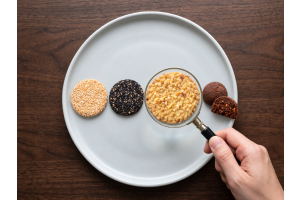
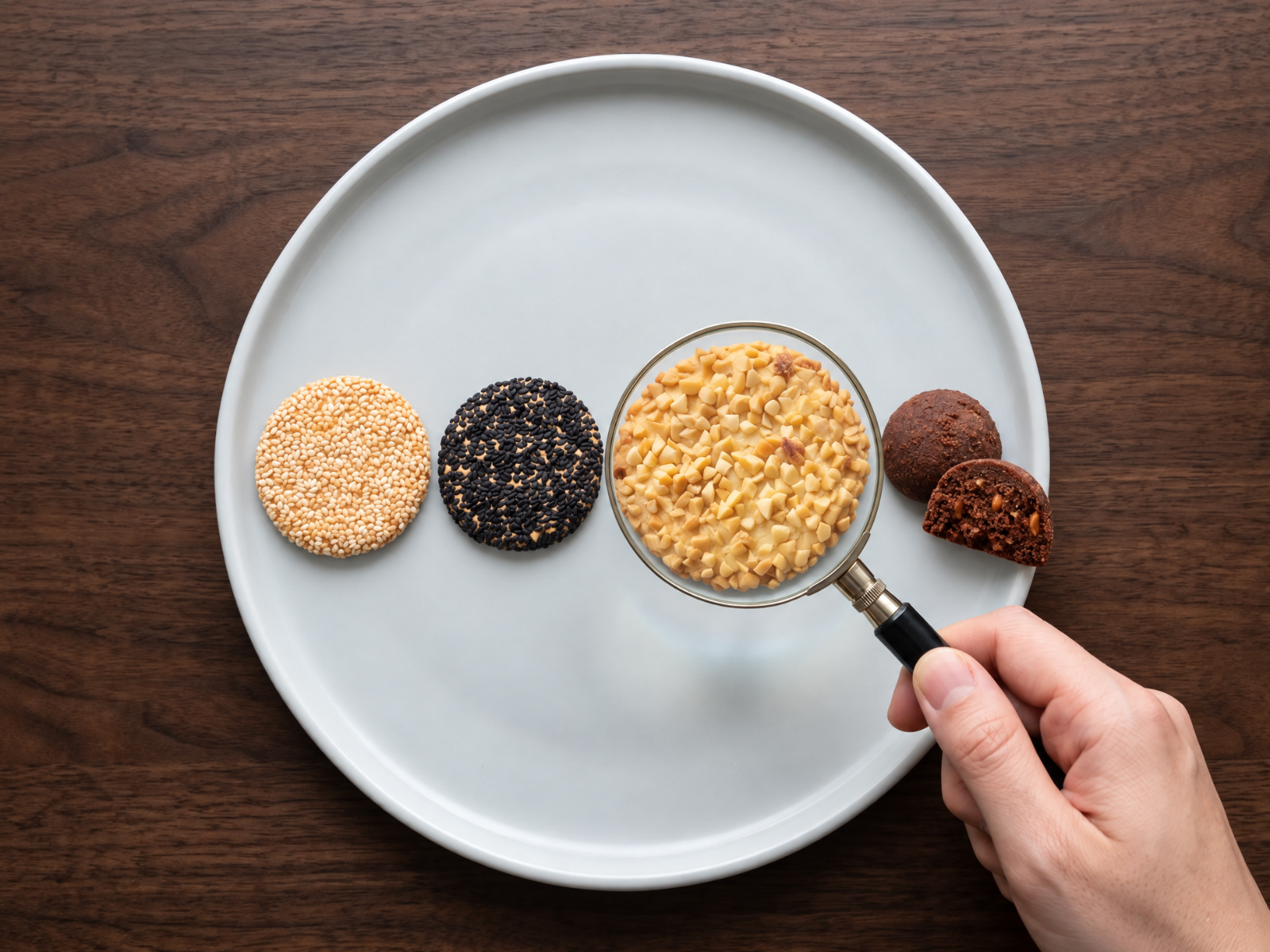
Nutrition labels aren't hard to understand once you grasp a few key concepts. In this article, we will use four Kee Wah snacks—Sesame Biscuits, Black Sesame Thin Cookies, Almond Thin Cookies, and Chocolate Chia Seed Cookie Balls—to teach you how to compare snacks based on calories, sugar, and sodium content. Different products have their own unique nutritional characteristics. Therefore, the goal here isn't to declare which snack is the "healthiest," but to help you learn how to read nutrition labels so you can make choices that fit your personal dietary needs.
How to Read Nutrition Labels? 4 Key Points When Comparing Snacks
In Hong Kong, food nutrition labels typically list energy, protein, total fat, saturated fat, trans fat, carbohydrates, sugars, and sodium. However, before you start comparing, the first step isn't to find the item with the lowest calories, but to check the reference amount used for the figures.
1. Check if it's "Per 100g" or "Per Serving"
Nutritional information can be displayed "per 100g," "per serving," or "per package." If one biscuit shows nutritional data per 100g and another shows it per two pieces, you cannot compare the two sets of numbers directly.
Therefore, if you want to compare the nutritional composition of different snacks, "per 100g" is usually the most common baseline. But if you want to know how many calories or how much sugar you will consume in one sitting, you should look at the "per serving" figures.
|
What do you want to know? |
Recommended figure to check |
|
To compare the nutritional composition of two snacks |
Per 100g |
|
To know your intake per consumption |
Per serving |
|
To eat the whole package at once |
Per package |
2. How to Look at Calories: Don't Just Focus on High or Low Numbers
What we commonly refer to as "calories" is usually listed as "Energy" on nutrition labels, typically measured in kilocalories (kcal).
When comparing snacks, you can first look at the energy per 100g to understand the relative differences between products. However, the portion size is equally important. For instance, two products might have similar calories per 100g, but if one has smaller pieces and you only eat one or two pieces at a time, your calorie intake will be different.
Therefore, deciding whether a snack suits you shouldn't be based solely on "lower calories per 100g." It's best to also consider your consumption portion.
3. How to Look at Sugar: Note That "Sugar" is Not Just Carbohydrates
"Carbohydrates" and "Sugars" on a nutrition label are not the same number. Sugar is a type of carbohydrate, so if you mainly want to compare the sugar content of different snacks, you should look directly at the "Sugars" column.
For example, even among different biscuits or thin cookies, varying recipes, ingredients, and production methods can lead to different sugar levels. When comparing, it's best to use a consistent baseline, such as checking how many grams of sugar are in every 100g, and then factor in your portion size.
It's worth noting that nutritional claims like "low sugar" are subject to specific regulatory requirements in Hong Kong. Therefore, simply having less sugar than another product doesn't mean it can directly be called a "low-sugar food." Reading the nutrition label and comparing the specific numbers is more reliable than judging by product names alone.
4. How to Look at Sodium: Equally Important for Sweet Snacks
When sodium is mentioned, many people immediately think of salty foods like potato chips or instant noodles. However, you can also find sodium content on the nutrition labels of biscuits, cookies, and other prepackaged foods.
Sodium is usually listed in milligrams (mg). If you want to compare two snacks, you can standardize the comparison by looking at the sodium content per 100g first, and then calculate your approximate intake based on your portion size.
Therefore, even if you are choosing sweet snacks, it's a good idea to check the sodium content alongside calories and sugar to make a more comprehensive comparison.
Nutritional Comparison of 4 Kee Wah Snacks: How to Compare Calories, Sugar, and Sodium?
Once you understand the basics of reading nutrition labels, you can apply this method to different snacks. Below, we've selected four Kee Wah snacks, each with distinct flavors and recipes, as examples.
|
Kee Wah Snack |
Calories per 100g |
Sugar per 100g |
Sodium per 100g |
Per Serving |
|
Sesame Biscuits (6 pieces) |
Approx. 533 kcal |
Approx. 23.3g |
Approx. 167mg |
1 piece (9g): 48 kcal, Sugar 2.1g, Sodium 15mg |
|
Black Sesame Biscuits (6 pieces) |
Approx. 533 kcal |
Approx. 23.3g |
Approx. 167mg |
1 piece (9g): 48 kcal, Sugar 2.1g, Sodium 15mg |
|
Almond Biscuits (5 pieces) |
560 kcal |
22g |
150mg |
1 piece (10g): 56 kcal, Sugar 2.2g, Sodium 15mg |
|
Chocolate Balls with Chia Seed (100g) |
545 kcal |
11.7g |
126mg |
Per package (100g): 545 kcal, Sugar 11.7g, Sodium 126mg |
Note: Nutritional information is subject to the nutrition labels on the product packaging; always align the food reference amount first when comparing different products.
Sesame Biscuits
If you love the traditional aroma of sesame, you can start with the Sesame Biscuits. Kee Wah's Sesame Biscuits are made with white sesame seeds, delivering a buttery fragrance and a crispy texture.
From a nutrition label perspective, you can focus on the energy, sugar, and sodium per 100g and per serving. Since a pack contains 6 pieces, if you usually only have one or two pieces for teatime, calculating per piece or per serving will be closer to your intake than looking at the figures for the whole package. Among the four, Sesame Biscuits are tied for the relatively lowest in calories but are relatively higher in sugar and sodium.
Per 100g: Approx. 533 kcal, Sugar 23.3g, Sodium 167mg; 1 piece (9g) is one serving.
Black Sesame Biscuits
Black Sesame Biscuits use black sesame seeds to bring out a richer sesame aroma. The thin biscuits are made with flour, eggs, sugar, and butter, topped with black sesame seeds.
The nutrition label shows that each Black Sesame Biscuit is also 9g, providing 48 kcal of energy, 2.1g of sugar, and 15mg of sodium. Converted to per 100g, this is approximately 533 kcal, 23.3g of sugar, and 167mg of sodium. In terms of calories, sugar, and sodium, the listed values are identical to the Sesame Biscuits.
Per 100g: Approx. 533 kcal, Sugar 23.3g, Sodium 167mg; all three values are the same as the Sesame Biscuits.
Almond Biscuits
If you prefer a nutty aroma, the Almond Biscuits feature crushed almonds on top of a biscuit, offering a richer, crunchier texture. They are crafted with flour, eggs, sugar, and butter, paired with almond pieces.
The nutrition label shows that each Almond Biscuit is 10g, providing 56 kcal of energy, 2.2g of sugar, and 15mg of sodium. Converted to per 100g, this is 560 kcal, 22g of sugar, and 150mg of sodium. Compared to the Sesame and Black Sesame variants, it has higher calories per 100g, but relatively lower sugar and sodium content.
Per 100g: 560 kcal, Sugar 22g, Sodium 150mg; 1 piece (10g) is one serving.
Chocolate Balls with Chia Seed
For a change of texture, you can also look at the Chocolate Balls with Chia Seed. These feature a cocoa flavor paired with chia seeds, almond flour, and almonds, creating a distinct difference in recipe and texture compared to the three thin biscuits above.
The net weight of each package is 100g, and the nutritional information is calculated per package, so it can be directly compared to the converted per 100g data of the other three snacks. Every 100g provides 545 kcal of energy, 11.7g of sugar, and 126mg of sodium. Compared to the rest, the calories aren't the lowest, but the sugar and sodium content are the lowest relatively among all four snacks. The sugar content is also about half that of the Sesame and Black Sesame cookies. If your main goal is to compare sugar or sodium, these cookie balls have relatively lower values in this lineup.
Per 100g: 545 kcal, Sugar 11.7g, Sodium 126mg.
Which of the 4 Snacks is Lower in Calories, Sugar, and Sodium?
After reviewing the nutrition labels, we can compare them across calories, sugar, and sodium. Since different products may not be the lowest in all nutritional metrics, it's best to choose based on the factor you care about most.
Relatively Lower Calories: Sesame Biscuits & Black Sesame Biscuits
Both have approximately 533 kcal per 100g, the relatively lowest among the four. The Chocolate Balls with Chia Seed have 545 kcal, while the Almond Biscuits have 560 kcal.
Relatively Lower Sugar: Chocolate Balls with Chia Seed
With 11.7g of sugar per 100g, this is relatively lower than the Almond Biscuits (22g) and the Sesame/Black Sesame biscuits (approx. 23.3g).
Relatively Lower Sodium: Chocolate Balls with Chia Seed
With 126mg of sodium per 100g, this is lower than the Almond Biscuits (150mg) and the Sesame/Black Sesame biscuits (approx. 167mg).
Next time you shop for snacks, try checking whether the information is listed per 100g or per serving first, and then compare the calories, sugar, and sodium. Considering the nutritional data alongside portion sizes, flavors, and your own dietary needs is a much more practical way to choose.
FAQ About Nutrition Labels
Q1. How should I read nutrition labels to compare two snacks?
When comparing different snacks, it is best to confirm whether the nutritional information is based on the same food reference amount, such as comparing both per 100g. After that, you can compare the calories, sugar, and sodium content, and factor in the per-serving data to understand how much you will consume in one sitting.
Q2. When comparing snacks, should I look at "per 100g" or "per serving"?
If you want to compare the nutritional composition of different products, you can look at the "per 100g" figures first. If you want to know how many calories, sugar, or sodium you will intake in one sitting, you should refer to the "per serving" size. Looking at both sets of numbers together provides a more comprehensive view than looking at just one.
Q3. Are lower-calorie snacks always healthier?
Not necessarily. Calories are just one piece of nutritional data. When choosing snacks, you should also look at the sugar content, sodium content, portion size, and your overall dietary habits. Therefore, a lower calorie count does not mean it is more suitable for everyone.
Q4. Does "relatively lower sugar" mean it is a "low-sugar snack"?
No. "Relatively lower sugar" only means that when compared among a few specific products, a certain product has a lower sugar content. It does not mean it meets the specific regulatory standards for a "low sugar" nutritional claim. Therefore, comparisons in this article are based on nutrition label data to avoid incorrectly labeling products as low-sugar foods.
Recent Posts